

Quick answer
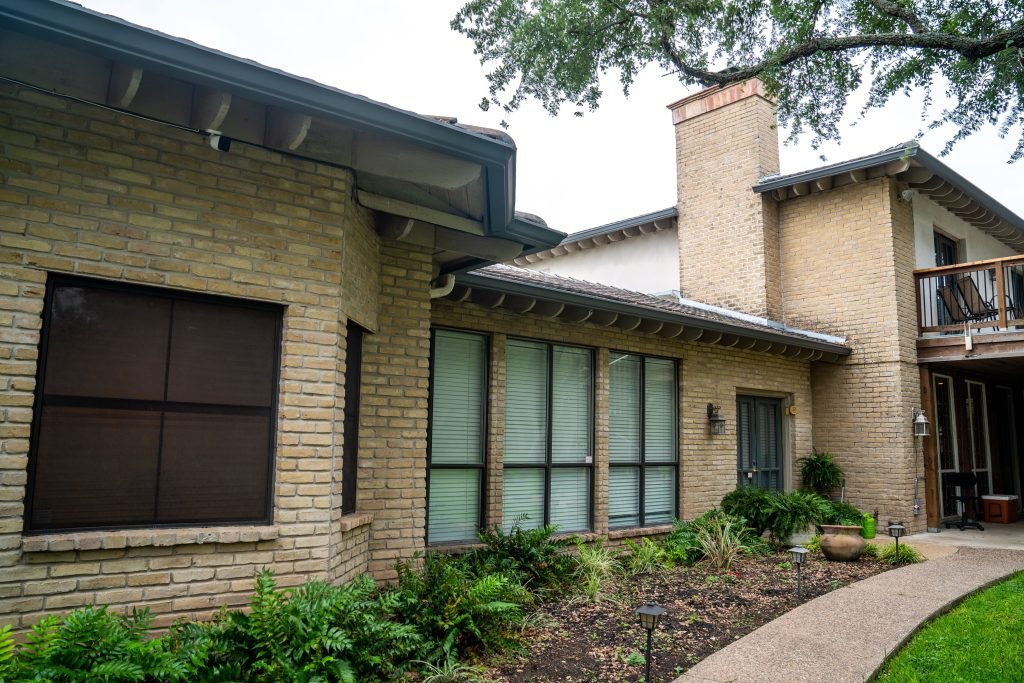
Why does my Greensboro yard stay soggy by the foundation after rain? Usually because a downspout is dumping roof water right there. Much of the Greensboro area has a dense clay subsoil. The USDA describes the Enon series, typed in Guilford County a mile southwest of Greensboro, with high runoff, low permeability and high shrink-swell potential. Clay sheds hard rain and soaks it up slowly, so water dropped at the wall stays near the footings and the crawl space. Every downspout should let out well away from the house. For a free written estimate call (336) 490-9686 or get a free quote.
What to look for
Signs roof water is landing in the wrong place
Most drainage problems announce themselves from the yard.
- A crawl space that smells musty or stays damp for days after a rain.
- Mulch washed onto the lawn or a bare channel under a downspout.
- Red clay splashed on the brick or siding along the gutter line.
- A puddle by the foundation that never seems to dry out.
- Water pouring over the gutter edge in a storm instead of going down the downspout.
Any one of these can come from a clogged gutter, a downspout that ends at the wall or a gutter run that is too small for the roof above it. The good news is that all three are gutter problems, and gutter problems are fixable.
The ground
Why Greensboro clay makes it worse
Greensboro sits in the Piedmont, where soils weathered in place from the rock below into dense clay.
The USDA describes the Cecil series, one of the classic Piedmont soils, with a red clay subsoil from about 8 to 42 inches down in the typical profile, firm, sticky and plastic. Its surface runoff is medium, which means hard rain runs across the top before it can soak in.
The Enon series has its official type location in Guilford County, a mile southwest of Greensboro. Its description lists high surface runoff, low to moderately low saturated hydraulic conductivity and high shrink-swell potential. In plain terms, water soaks in slowly, and the clay swells when it gets wet and shrinks as it dries.
Soil changes from lot to lot, and the backfill against a house is disturbed ground. But the pattern holds, and NOAA’s normals put about 44 inches of rain a year on it. A single downspout dumping a whole roof’s water at one corner keeps that corner wet.
Source: USDA NRCS official series descriptions, Cecil series and Enon series; NOAA 1991 to 2020 climate normals for Piedmont Triad International Airport.
The fix
How gutters and downspouts fix it
The goal is simple: catch all of the water at the roof edge and let it out well away from the house.
- Keep the gutters clear.A clogged gutter spills along the whole wall, and no downspout plan can fix that. Regular gutter cleaning is step one.
- Size the runs for the rain.NOAA Atlas 14 puts the hardest hour in a typical year at 1.30 inches at our Alliance Drive office. Runs that spill in hard rain may need another downspout or 6 inch gutters.
- Move the water out.Each downspout ends in an elbow turned away from the house, with an extension, a moved downspout or a buried line carrying the water to ground that slopes away.
- Fix the leaks.A leaking seam or a sagging run drops water in one spot every rain. Gutter repair stops it.
| Option | Works well when | Watch for |
|---|---|---|
| Downspout extension | The yard falls away from the house and there is open lawn beside the downspout | Extensions get kicked or mowed over, and then the water lands at the wall again |
| Moved or added downspout | Another corner has better ground below it, or one outlet carries too much roof | Each new drop needs a clear path away from the house |
| Buried drain line | Beds, walks or a driveway sit where the water needs to go | The line needs enough fall to keep water moving and a guarded inlet |
See our underground drainage page for how we plan buried lines, and our red clay drainage guide for the full soil picture.
Next steps
When to call us
If you are seeing more than one of the signs above, a free drainage check is the fastest way to an answer.
A local Solutionist walks the whole house, traces every downspout to where it lets out and shows you where the water is landing. You get a written plan, whether that is a cleaning, a couple of extensions, a moved downspout or a buried line, before anyone digs.
Water sitting by your foundation after storms? Call (336) 490-9686
Book a Free Drainage CheckLocal tip: during the next steady rain, walk the outside of the house with an umbrella and look at where each downspout lets out. Any water pooling within a few feet of the wall is water your crawl space will feel.
Frequently Asked Questions
Much of the Piedmont weathered in place into clay, and the USDA describes the Cecil series, one of the most common Piedmont soils, with a red clay subsoil starting about 8 inches down in the typical profile.
Often, yes. A crawl space that stays damp after rain is frequently getting roof water dumped beside it. Clear gutters and downspouts that let out well away from the house take that water out of the picture.
Well away from the foundation, onto ground that slopes away from the house. Where that is not possible, we move the downspout or run a buried line to a better spot.
Clay soaks up water slowly. The USDA lists low to moderately low saturated hydraulic conductivity for the Enon series, which is typed in Guilford County, so water dumped at the wall sits there instead of draining away.
Yes. Every drainage check and estimate is free and in writing, across Greensboro and Summerfield.
Free estimates
Where does your roof water end up?
A local Solutionist traces every downspout, shows you where the water lands and puts the fix in writing before anyone digs.
The Brothers That Just Do Gutters · Greensboro · (336) 490-9686 · 3714 Alliance Dr #111, Greensboro, NC 27407
 Gutter Installer Jobs in Greensboro: Two Openings, Real Pay and a Path Up
 How Often Should You Clean Your Gutters in Greensboro?
 How Much Rain Does Greensboro Get? What It Means for Your Gutters
Locally Owned & Operated · Greensboro, North Carolina · Serving Greensboro, Summerfield and the surrounding areas